TPR: teaching English through the body, and where it stops working
TPR is the method behind the Brets classroom. It solves the hardest problem in a beginner class — the silence — but it has a ceiling, and honest teaching says where.
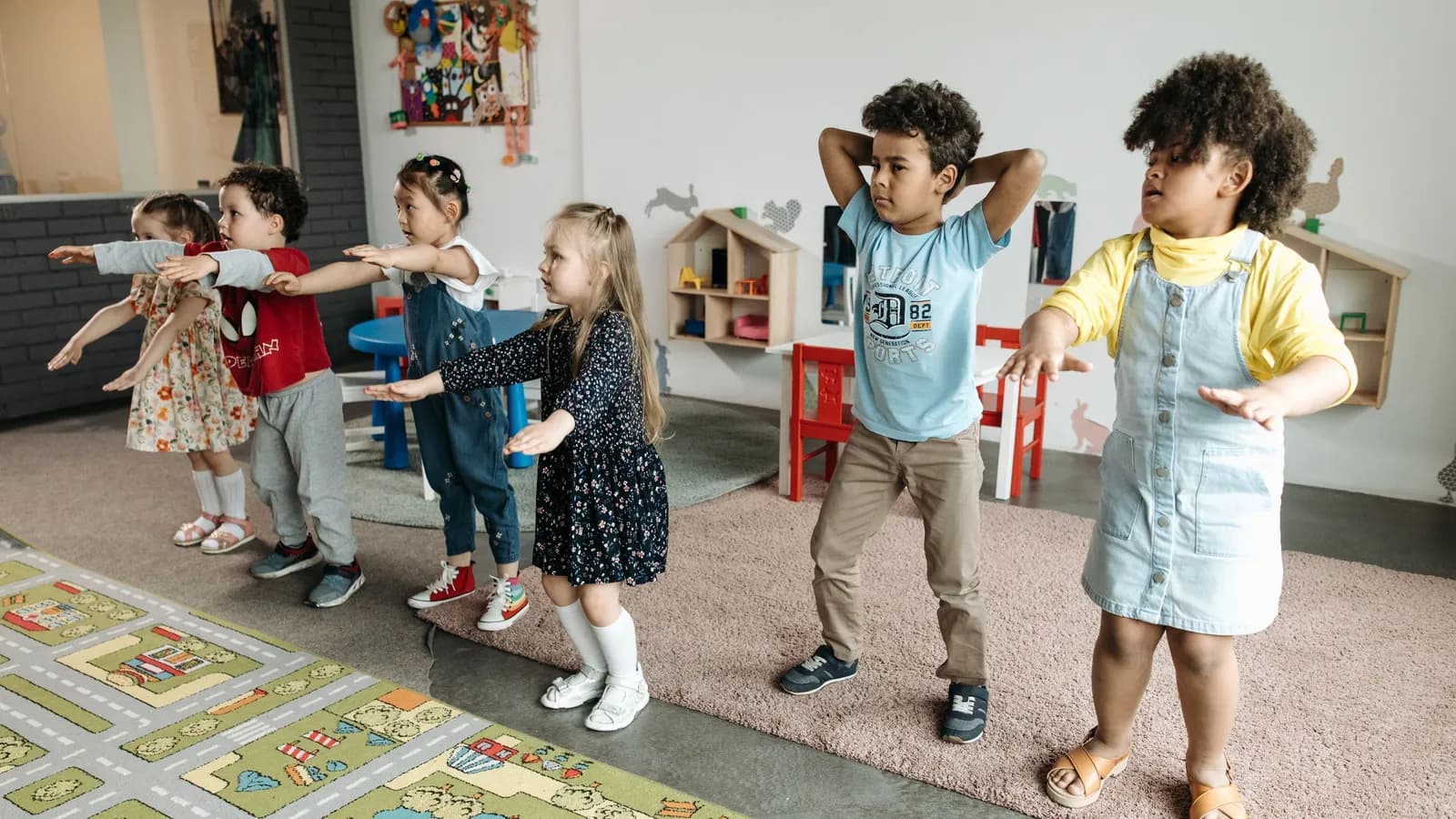
Total Physical Response was developed by James Asher in the 1960s from a simple observation: children understand a great deal of language long before they produce any of it, and they learn it while physically responding to it — come here, give me that, sit down.
TPR applies that to the classroom. The teacher gives instructions; learners respond with movement rather than with speech. Comprehension comes first, production follows, and nobody is asked to speak before they can.
Why it works on the problem Kerala classrooms actually have
The blocker in a beginner or hesitant English class is almost never capacity. It is the fear of speaking badly in front of others — which in Kerala is amplified because English carries social status, so a mistake feels like a statement about you rather than about your English.
TPR sidesteps that entirely at the start. A learner who stands up when told to stand up has understood English and demonstrated it publicly, without risking a single word. That is a real success, visible to the whole room, and it comes in the first two minutes.
It also attaches language directly to actions and objects rather than to Malayalam translations — which is the same mechanism that makes narrating what you are doing work for adults practising alone.
VideoA complete micro-lesson in under sixty seconds — setup, model, drill, check. The same four beats a full class period uses, compressed.
What a TPR sequence looks like
- Model. The teacher says the instruction and performs it.
- Joint action. Teacher and class do it together, several times.
- Class alone. Teacher instructs, class responds. No speaking from learners yet.
- Individuals. One learner responds while others watch.
- Role reversal. A learner gives the instruction. This is the first speech, and by now it is safe.
- Recombination. Known elements in new combinations — walk to the door and open it slowly — which is where it stops being mimicry.
Step 6 is what separates TPR from charades. If learners only ever respond to instructions they have already heard, they are memorising a routine, not acquiring language.
VideoA classroom clip showing what teacher-grade delivery actually sounds like — pace, stress and eye contact, not vocabulary size.
Where TPR stops working
An honest account has to include the ceiling, and most TPR advertising does not.
It is strongest with imperatives and concrete vocabulary. Body parts, classroom objects, movement, position, simple sequences. You cannot physically respond to I would have gone if I had known.
It does not teach abstraction. Opinions, hypotheticals, tenses beyond the immediate — none of it has a physical form.
It fatigues. Twenty minutes is energising; a full hour of it exhausts adults and starts to feel childish, which costs you the room.
It needs a teacher who will perform. A trainer unwilling to look silly cannot run TPR. This is a genuine selection criterion, not a joke.
So the working answer is: TPR for the first stage, for vocabulary, and as a warm-up thereafter — then hand over to communicative practice for everything abstract.
Learning to teach it
TPR is mostly not knowledge; it is delivery. Reading about it is nearly useless, which is why it has to be practised and observed.
The teacher training course includes live teaching practice with feedback, and the IETTC curriculum was designed by Nishad Ahmed, an international TPR trainer and Oxford University Press Resource Person. For how a lesson is structured around this, see lesson planning for English teachers.
Frequently asked questions
- What is the Total Physical Response method?
- A language teaching method in which learners respond physically to spoken instructions rather than speaking at first. Comprehension is built before production, so learners demonstrate understanding without having to risk saying anything.
- Is TPR only for children?
- No, though it is often assumed to be. It works well with adult beginners and with hesitant speakers, because it removes the fear of speaking badly. The limits are length and abstraction — adults tire of it faster and it cannot teach hypotheticals or opinions.
- What are the disadvantages of TPR?
- It handles concrete, physically demonstrable language well and abstract language not at all — tenses, opinions and hypotheticals have no physical form. It also fatigues learners if run for a full hour, and it requires a teacher willing to perform.
Keep reading

English teacher training in Kerala: what a certificate is actually worth
The teacher training market is full of acronyms and short on plain answers. Here is what each qualification is, and who actually asks for it.

What is the Cambridge TKT, and is it worth taking?
TKT gets mentioned in every teacher training advertisement in Kerala and explained in almost none of them. It is a modular exam with no pass mark — and that matters.

Lesson planning for English teachers: the shape that actually works
Most weak lessons are not weak because the teacher lacked English. They are weak because the lesson had no aim — or had four.