Ten English grammar mistakes almost every Malayalam speaker makes
These mistakes are shared by millions of speakers because they have a shared cause. Each one is a place where Malayalam grammar and English grammar genuinely disagree.
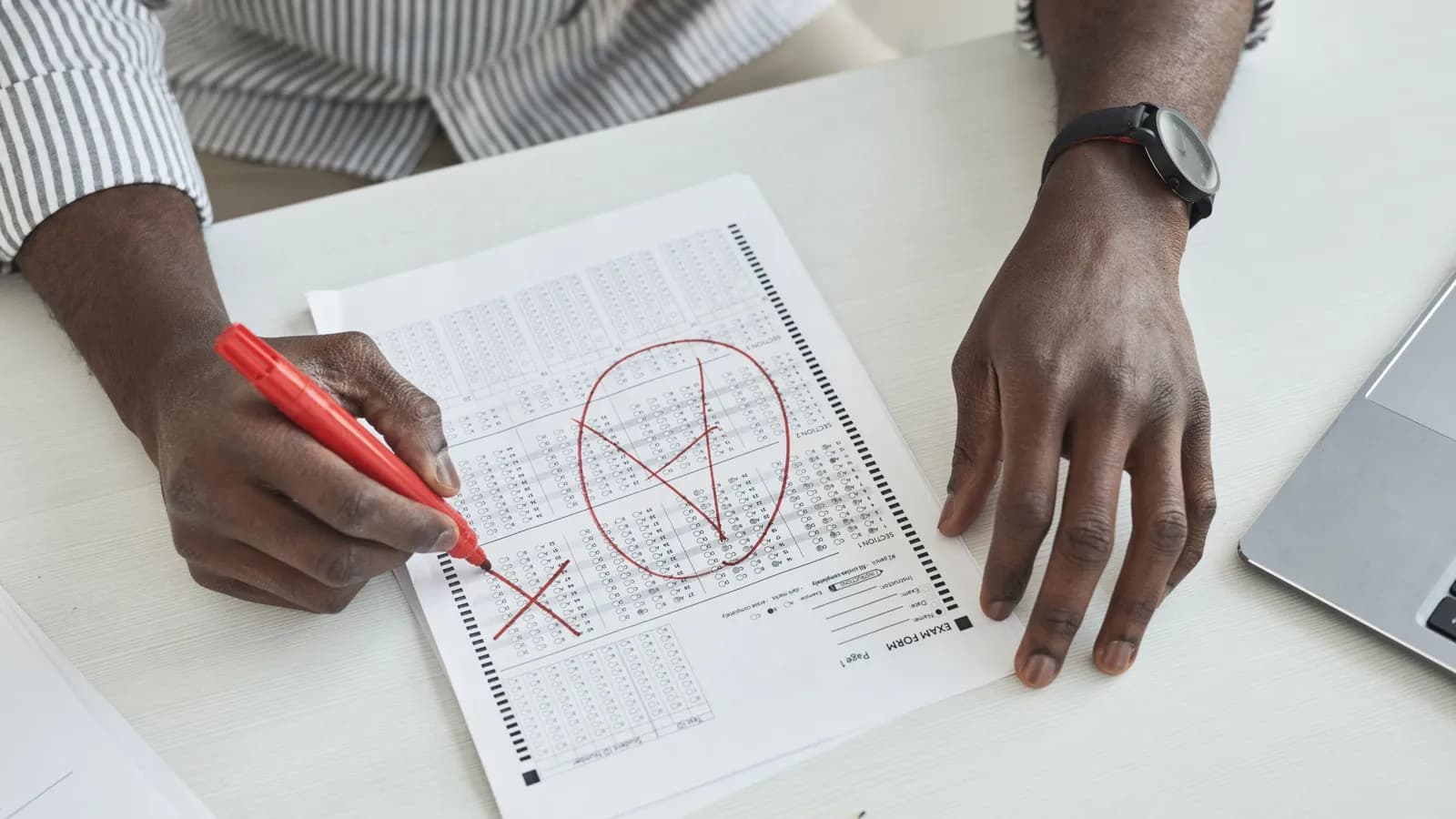
Grammar mistakes made by Malayalam speakers are remarkably consistent, and that consistency is the useful part. They are not random gaps in knowledge — each is a point where Malayalam does something English does not, and the first language wins by default.
Once you can see the cause, the correction stops being a rule to memorise and becomes a habit to notice.
1. "I am having a car"
English splits verbs into dynamic (actions) and stative (states). Stative verbs — have, know, like, want, believe — do not normally take the continuous form. Malayalam has no such split, so the continuous gets applied everywhere.
Say: I have a car. I know him. I like this.
2. Dropping articles
Malayalam has no a, an or the, so there is nothing to transfer. The habit is to omit them entirely: I am going to shop, He is doctor.
Say: I'm going to the shop. He is a doctor.
3. "Yesterday I went to shop only"
Only and itself get used as emphasis markers, mirroring Malayalam's –thanne. It reads as odd to speakers outside India.
Say: I went to the shop yesterday — or, for emphasis, I did go to the shop yesterday.
4. "Where you are going?"
English inverts subject and verb in questions. Malayalam marks questions differently, so the statement order survives.
Say: Where are you going?
VideoA two-option quiz reel — a format worth stealing for a classroom warm-up, because it makes every learner commit to an answer before the correction lands.
5. "He didn't went"
Once did carries the tense, the main verb returns to its base form. Doubling the past tense is the most common written error in this list.
Say: He didn't go.
6. "Since two years"
Since takes a point in time; for takes a duration.
Say: For two years. / Since 2024.
7. "Discuss about"
Some English verbs take a direct object with no preposition: discuss, marry, approach, request. The preposition arrives from the Malayalam equivalent.
Say: We discussed the plan.
8. "One of my friend"
One of requires a plural after it.
Say: One of my friends.
9. "Myself Rahul"
A fixed introduction formula, common across India and understood nowhere else.
Say: I'm Rahul.
10. "Revert back"
Revert means to return to a previous state, not to reply. In Indian business English it has drifted to mean "reply", which causes real confusion in international mail.
Say: I'll get back to you.
How to actually fix them
Do not try to fix ten. Pick the one you make most often, and spend a week noticing it rather than correcting it — noticing has to come first, because you cannot correct an error you do not detect.
Then correct it only in writing for a week, where you have time. Speaking will follow, because the pattern will finally be one you can hear.
The LangVR courses treat these as a fixed, known list rather than as general grammar study, because for a Malayalam speaker they very nearly are.
Frequently asked questions
- Why do Malayalam speakers make the same English mistakes?
- Because the mistakes are not random. Each is a place where Malayalam grammar genuinely differs from English — no articles, a different question structure, no stative/dynamic verb split — and the first language fills the gap by default. That is also why the list is short and fixable.
- Is "I am having a car" wrong?
- Yes, in standard English. "Have" in the sense of possession is a stative verb and does not take the continuous form. "I have a car" is correct. The continuous is fine when "have" means an action: "I am having lunch" is correct.
- What is wrong with "revert back"?
- Two things. "Revert" already contains the sense of going back, so "back" is redundant — and more importantly, "revert" means to return to a previous state, not to reply. In international email "I will revert" reads as a mistake. Use "I will get back to you".
Keep reading

Eight English pronunciation mistakes Malayalam speakers make
Most accent features are harmless. About eight are not, because they turn one English word into a different one. These are the eight worth your time.

Word stress: the English mistake that causes the most confusion
You can mispronounce several sounds in a word and still be understood. Move the stress one syllable and the word often stops registering at all.

The schwa: the most common sound in English, and the one nobody teaches
English spelling shows you five vowels. Spoken English collapses most of them, in unstressed syllables, into one — and pronouncing them fully is what makes careful English sound wrong.